Are you ready to unleash a fruitful and healthy future with little-known Phytonutrients?
It’s time to discover the benefits of eating colorful foods!
The major nutrients in food that you think of first are carbohydrates, proteins, and fat. But besides these, there are some bioactive food components known as “phytonutrients.” And these play an essential role in your health.
The word “Phyto” comes from the Greek language and means plant.
Phytonutrients are natural compounds produced by plants that give them rich colors, distinctive tastes, and aromas.
They strengthen the plant’s immune system and protect it from threats like insects and the sun.
Phytonutrients significantly impact the human body, providing health benefits that may help protect from chronic diseases.
It’s not sure how many phytonutrients exist, but thousands appear in plants and related foods. So, there is a significant chance you already eat lots of them in your daily meals.
Phytonutrient-Rich Food
Luckily for us, you don’t have to look any further than the fruit or nut section to find phytonutrient-rich foods.
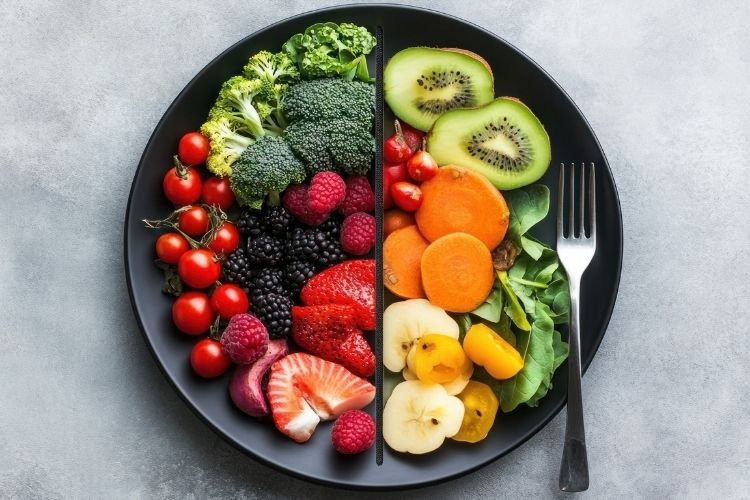
The main food groups and some of the most well-known sources of phytonutrients are:
- Fruits
- Vegetables
- Whole grains
- Tea
- Nuts
- Spices
If we sort the foods by color, you can get a clearer picture…
Red
You will find many phytonutrients in vegetables and fruits like tomatoes, bell peppers, watermelon, and berries.
Orange and Yellow
Carrots, summer squash, mango, citrus fruits, and peach are just some of the most popular foods that contain a high number of phytonutrients.
Green
Many vegetables have the color green, so you have a wide selection here. Try to choose more spinach, kale, broccoli, avocado, and collard, as these are exceptionally high in phytonutrients.
White and Brown
Here, you find like garlic, onion, cabbage, soybeans, legumes, flax seeds, peanuts, and whole grains.
Blue and Purple
You can find some effective phytonutrients in this color category. Eating, for example, blueberries, blackberries, and grapes will provide you with lots of health benefits from the phytonutrients.
Phytonutrients and Your Health
Colorful foods like fruits, vegetables, whole grains, and nuts are natural medicine for your body. The combination of fiber, vitamins, minerals, and phytonutrients benefits your body and health. It can help protect you from various chronic diseases.
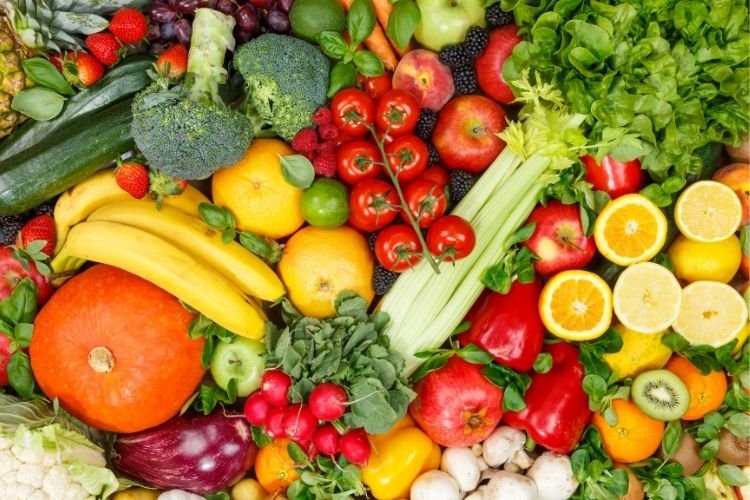
Here are six of the greatest phytonutrients:
1. Beta-carotene helps improve your immune system, skin, and even your vision.
2. Lycopene helps prevent heart diseases and prostate cancer.
3. Lutein helps your body improve yourheart health and may prevent some types of cancer, and it’s also proven to increase your eye health.
4. Resveratrol can lower inflammation and better your lung health.
5. Anthocyanidins may increase your chances of better blood vessel health.
6. Isoflavones have many benefits like lower cholesterol and joint inflammation and lower breast cancer risk. It may also make menopause a little easier to go through for a woman.
Studies have shown that people mainly eating a plant-based diet may have significantly lower rates of cardiovascular diseases, heart problems, and even cancer.
Although there is no evidence that phytonutrients guarantee to reduce the risk of or eliminate cancer, there is promising evidence indicating positive results in helping:
- Aid the function of the immune system
- Protect cells and DNA from damage that may lead to cancer
- Slow the growth rate of many cancer cells
How To Eat More Phytonutrients
To get started, try to add as many plant-based colors to your meals as possible. Remember, each color provides your body with different health benefits. Therefore, a balance of colors is best.
Getting all the good phytonutrients also means eating the colorful skins and the paler flesh. Because this is the richest source of phytonutrients, try to avoid peeling foods like apples, peaches, and eggplants.
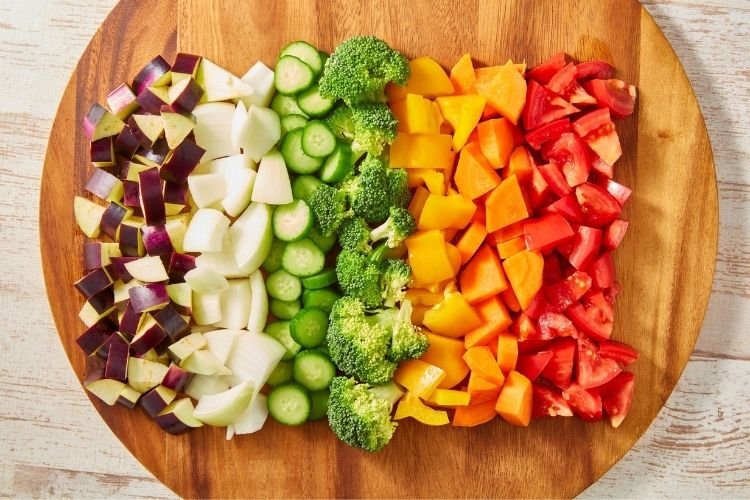
Here are some helpful and straightforward tips to include more phytonutrients:
1| Remember that servings are not that big: Aim for 4-5 servings of fruit and vegetables per day. To make it easier for yourself, think that your fist makes up one serving of vegetables or fruit.
2| Snacks count, too: If you feel hungry in between meals, use the opportunity to munch on a piece of your favorite fruit or some sliced raw vegetables to go. You can even make some garlic roasted chickpeas as a snack.
3| When shopping, look at your cart: Do you find that you have mostly the same one or two colors in your cart? Try swapping out a few to increase the colors and phytonutrients.
4| Look local: Visit your local farmer’s market or the nearest farm. Here you will usually find a wide selection of fresh foods packed with phytonutrients. You can, for example, search for new fruits and vegetables and ask the farmer for fresh ideas on how to prepare them.
5| Try frozen: While fresh fruits and vegetables might taste slightly better, they are not always in season. So, remember that frozen count too and are just as nutritious as fresh fruits.
The Upshot
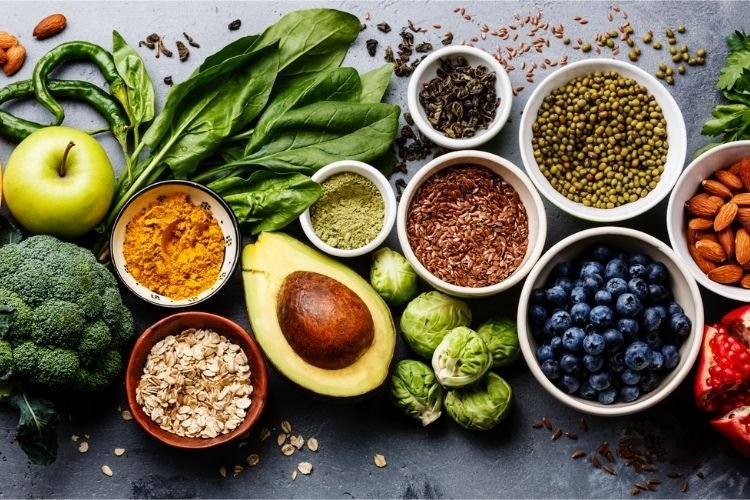
Paint your plate with the colors of the rainbow! Choose something red, a little yellow, or a piece of green, and add a bit of brown or white.
By increasing the number of colors and, thereby, the phytonutrients, you can boost your health and help decrease the chances of various diseases.
Resources & Further Reading
1. Phytonutrients as therapeutic agents. Charu Gupta, Dhan Prakash
3. Vegetables. Sawsan G Mohammed, M Walid Qoronfleh
4. Characteristics and Health Benefits of Phytochemicals. Claus Leitzmann
5. The role of antioxidant phytonutrients in the prevention of diseases. Andrea Lugasi
8. Introduction of Phytonutrients. Lutfun Nahar, Jianbo Xiao, Satyajit D. Sarke
9. Phytochemicals: Carotenoids and Flavonoids. By Stephen T. Sinatra
Enjoying these free meal plans?
If Savvy Meal Plans has helped make healthy eating a little easier, consider buying me a coffee. Your support helps cover recipe testing, website costs, and the creation of more free meal plans and healthy recipes. Every contribution, big or small, truly means a lot. ❤️
☕ Buy Me a CoffeeThank you for supporting independent recipe creation.